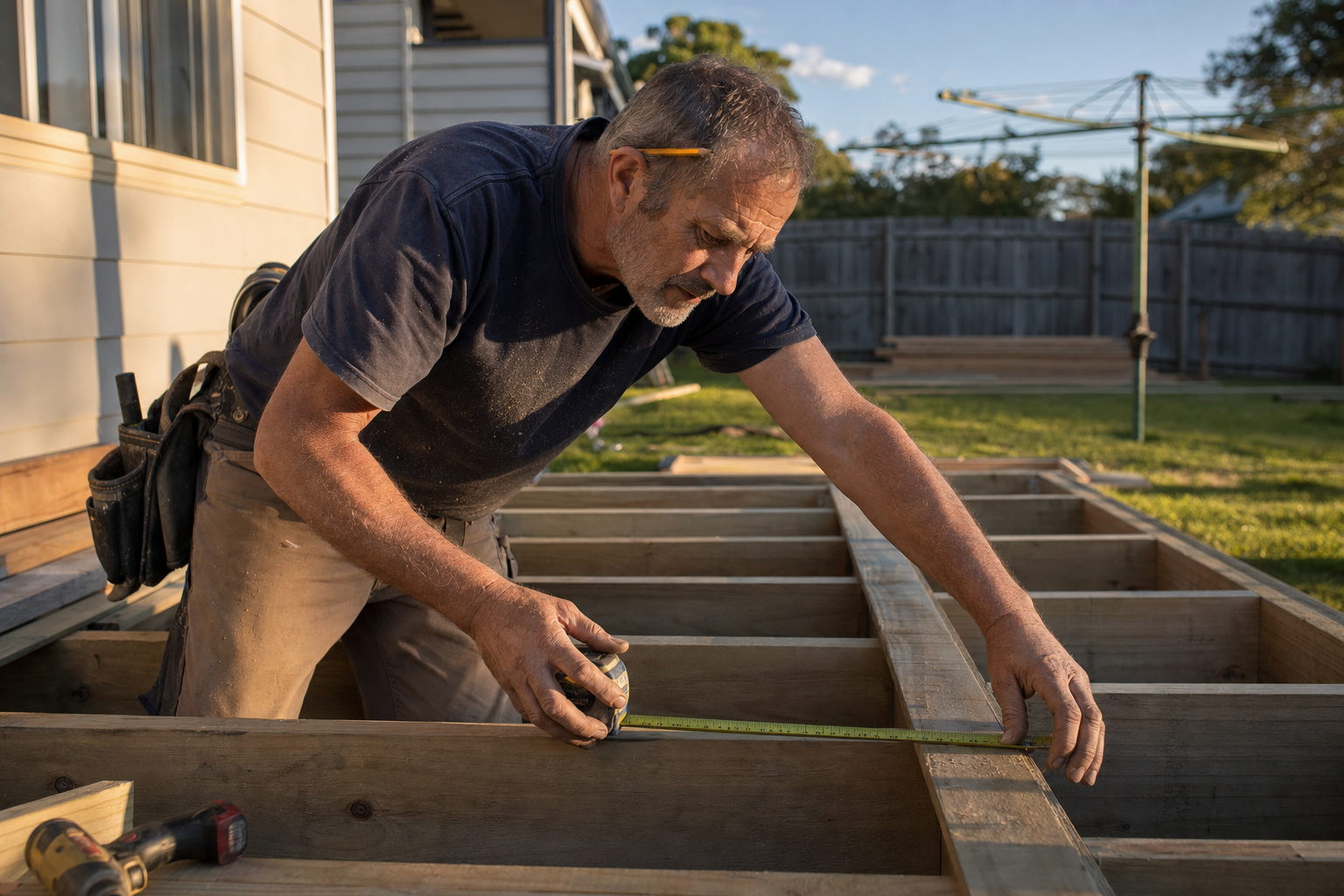
This isn't a generic government info dump. It's what you actually need to do, in order, with links to the real systems. No fluff. No "call an accountant" (though you should, eventually). Just the 12 steps to get your business on its feet.
Your ABN (Australian Business Number) is your business ID. You'll need it for quoting, invoicing, tax, everything. The good news: it's free and takes 5 minutes.
What you need:
- Your TFN (Tax File Number) — or you can apply for one at the same time
- A valid ID (driver's licence, passport)
- Your business name (or your own name if you're trading as a sole operator)
- Your business address
How to apply:
- Go to abr.gov.au
- Click "Apply for an ABN" (usually instant if you're an Australian citizen)
- Fill in your details, tick the boxes, and submit
- You'll get your ABN in seconds, or within a few days if they need to verify anything
If you apply online as a sole trader using your TFN, it's usually instant. If ASIC needs to manually check anything, it can take a few days. But you can still operate and quote while you wait.
GST is goods and services tax (10% in Australia). You must register once your annual turnover hits $75,000. But here's the thing — you might want to register earlier anyway.
When you MUST register:
- Your annual turnover ≥ $75,000
When you MIGHT want to register early:
- You're buying equipment, tools, or materials now (you can claim GST input credits)
- Your clients are mostly businesses (they expect GST invoices)
- You want to look more established
How to register:
- Go to ato.gov.au
- Log in (or create an account with your ABN)
- Register for GST through your account
- You'll be assigned a registration date — usually the date you apply, or the first day of the next quarter
What GST means for your quotes:
- On invoices, you add 10% GST to your subtotal (e.g., $100 + $10 GST = $110 total)
- You hold that $10 in trust and pay it to the ATO
- BUT if you bought materials for $50 + $5 GST, you claim back that $5
- So really, the ATO only gets the GST on your profit (the difference between what you charged and what you spent)
Keep ALL receipts — especially for materials and equipment. GST credits are only good if you can prove you paid GST in the first place.
You have two choices: trade under your own name ("John's Plumbing" if you're John) or register a proper business name ("Premier Plumbing Solutions").
Trading under your own name:
- Free
- No registration needed
- Just use your ABN
- Simpler, especially starting out
Registering a business name:
- Costs ~$45/year or $104/3 years (varies by state)
- Protects the name so someone else can't use it
- Looks more professional on quotes and invoices
- Register via ASIC (asic.gov.au) or your state business registry
What about a company (Pty Ltd) or trust?
- Sole trader: Simplest structure. You ARE the business. Easy tax, easy admin. Downside: you're personally liable for everything
- Company (Pty Ltd): Separate legal entity. Protects your personal assets if something goes wrong. Costs ~$500–$900 to set up, plus ~$290/year ASIC fee. More paperwork (company tax return, ASIC annual review)
- Trust: More complex again. Useful for asset protection and tax distribution between family members. Needs a lawyer to set up ($1,000+)
Start as a sole trader. It's the simplest path and gets you earning immediately. Once you're consistently earning good money — say $100k+ revenue — talk to your accountant about restructuring to a Pty Ltd for asset protection. Don't overcomplicate things on day one.
Get a separate bank account for your business ASAP. It takes 10 minutes, and it saves you from a nightmare at tax time.
Why separate?
- Tax time is SO much easier (all business in one account, personal in another)
- You can see how much cash is actually flowing
- Accountants hate tracing mixed accounts (costs you money)
- Looks more professional (clients see legit deposits)
What to look for:
- Low (or no) monthly account fees
- No cap on deposits or withdrawals
- Good mobile app (you're on sites, not in an office)
- Decent interest rate (unlikely but nice to have)
- Fast transfers (so you can move money when you need it)
Best Australian banks for small operators:
- Commonwealth Bank, Westpac, NAB, ANZ: Big names, support everywhere, but often pricey
- St.George, Bank of Queensland: Regional friendly, competitive on business accounts
- ING: Low fees, good rates, solid app
- Macquarie Bank: Online, no fees, fast
Just walk in with your ABN and ID, or do it online. They'll get you set up in a day or two.
Insurance isn't fun to think about, but one accident without cover can bankrupt you. Get the basics sorted now.
Public liability (ESSENTIAL):
- Covers you if you damage a client's property or someone gets hurt on the job
- Most clients will ask for proof before letting you start
- Typically $200–500/year depending on your trade
Tools & equipment:
- Covers theft, damage, loss of your tools and equipment
- Depending on the value of your kit, can be worth it
- Usually $400–800/year
Income protection:
- If you can't work (injury, illness), this replaces your income
- Especially important if you're the only one bringing in money
- Usually $50–150/month depending on coverage
Professional indemnity (some trades):
- Covers you if your work or advice causes a client financial loss
- Relevant if your trade involves design, specification, or sign-off (some electrical, plumbing, engineering work)
- Not needed for every trade, but worth checking — some contracts require it
Workers compensation:
- Only required if you employ anyone
- Covers your employees if they get hurt at work
- Varies by state and number of employees
How to get quotes:
- TradeRisk — tailored for tradies
- BizCover — good comparison tool
- iSelect — compares multiple providers
- Your bank sometimes offers packages
Don't cheap out here. A $300/year public liability policy means you're covered for hundreds of thousands in claims. Worth every dollar.
Some trades need a specific licence. Others don't. Check your state and trade type — it takes 2 minutes online.
Trades that usually need a licence:
- Electricians (most states require Level 1, 2, or 3 licence)
- Plumbers & gasfitters
- Air conditioning & refrigeration technicians
- Painters (some states)
- Locksmith, security alarm installer
How to check if you need one:
- Go to ABLIS (Australian Business Licence & Information Service)
- Type in your trade type and state
- It'll tell you exactly what licence you need and who issues it
If you need a licence:
- Contact your state's regulatory board (electricians' board, plumbing board, etc.)
- They'll tell you the requirements (training hours, exams, experience, etc.)
- If you already have the hours/experience, apply and pay the fee
- If you don't, you'll need to do a course or apprenticeship
Note: Some tradies operate as contractors under someone else's licence (e.g., you do electrical work for a licensed electrician). That's fine, but double-check the rules for your state.
This is one of the biggest legal traps for new tradies, and most people don't know about it until it's too late. If the ATO decides you're actually an employee — not a contractor — it changes everything: tax, super, insurance, the lot.
When you're a genuine contractor:
- You control how, when, and where you do the work
- You work for multiple clients (not just one)
- You provide your own tools and equipment
- You quote for jobs and invoice for completed work
- You carry your own insurance and ABN
Red flags that say "employee":
- You work exclusively for one builder or company
- They tell you when to start, when to finish, and how to do it
- They provide your tools and materials
- You get paid by the hour (not per job)
- You can't subcontract the work to someone else
Why it matters:
- If the ATO reclassifies you as an employee, the company that hired you owes back-super, PAYG, and potentially penalties
- You could also lose contractor tax deductions you've been claiming
- "Sham contracting" — where a business calls you a contractor to avoid paying super and entitlements — is illegal and the ATO is actively cracking down on it
If you're working for one company full-time and they're treating you like staff, you might legally be an employee regardless of what your contract says. The ATO has a contractor vs employee decision tool that takes 5 minutes — worth doing before you sign anything.
Tax might sound complicated, but it's really just: earn money, spend money, keep records, pay tax on the difference.
Income tax:
- You pay tax on your profit (turnover minus deductible expenses)
- Current tax rates (2025–26): 16% on $18,201–$45,000 · 30% on $45,001–$135,000 · 37% on $135,001–$190,000 · 45% above $190,000 (plus 2% Medicare levy)
- You pay this once a year when you lodge your tax return
- Your accountant will work this out, but you should know your bracket so you can set aside the right amount as you go
BAS (if you're GST-registered):
- Every quarter, you lodge a Business Activity Statement
- It shows: GST you collected, GST you paid on purchases, and the net amount you owe the ATO
- Due dates: 28 October (Q1: Jul–Sep), 28 February (Q2: Oct–Dec), 28 April (Q3: Jan–Mar), 28 July (Q4: Apr–Jun)
- You can lodge it yourself or get an accountant to do it
PAYG instalments:
- If you earn over a certain amount, the ATO might ask you to make quarterly payments (so you don't owe a huge amount at tax time)
- You'll be told if you need to do this
Keep records for 5 years:
- Invoices (what you sent to clients)
- Receipts (everything you bought for the business)
- Bank statements
- Any other proof of income/expenses
Superannuation (pay yourself):
- As a sole trader, you're not legally required to pay yourself super — but you absolutely should
- Employees get 11.5% super on top of their wage. You get nothing unless you set it up yourself
- Open a super fund (your existing one is fine), set up a regular contribution, and treat it like a bill
- Contributions up to $30,000/year are tax-deductible — so it actually reduces your tax bill
- Future-you will thank present-you. Tradies' bodies don't last forever.
Get an accountant. This isn't optional. A good accountant costs $800–2000/year and saves you way more than that in tax. They'll also make sure you're not missing deductions.
This is where you actually make money. Don't shortcut it.
Work out your hourly cost:
- Labour cost: What you need to earn per hour to cover your living expenses and taxes
- Example: You need $100k/year to live + tax, that's ~$65/hour (factoring in unpaid admin, downtime, holidays)
- Overhead cost: Van, fuel, insurance, phone, tools, etc. — add it all up, divide by work hours
- Example: $20k/year overheads ÷ 1,500 working hours = ~$13/hour
- Total: $65 + $13 = $78/hour is what you need to break even
Add your markup for profit:
- Most tradies work at 15–25% markup (some go higher)
- $78 × 1.2 (20% markup) = $94/hour
- Round it: $100/hour, or $120/hour if you're experienced
Hourly vs fixed price:
- Hourly: You charge per hour worked. Good for smaller jobs, variations, when you don't know the scope
- Fixed: You quote a flat price upfront. Better for jobs where you know exactly what's involved. Riskier if you underestimate
- Most tradies mix both — hourly for initial visits, labour, surprises. Fixed for known scope work
Call-out fee:
- A standard fee just to show up (diagnostics, travel, setup)
- Usually $50–100 depending on your trade
- This covers your fuel and time even if the job is tiny
Keep your quotes simple:
- Don't itemise every nail, fitting, and tube of silicone with exact costs — clients will Google your materials and haggle over $3
- Instead, quote the job as a service: "Bathroom tap replacement — supply and install: $380"
- You can break it into a few broad lines (labour, materials, call-out) but you don't owe anyone a shopping list
- This protects your markup and keeps the conversation about the outcome, not the cost of parts
Example — breaking a bigger job into services:
Say you're quoting a bathroom renovation. Instead of listing 47 line items, group it into services the client actually understands:
- Demolition & strip-out: $850
- Waterproofing — supply & install: $1,200
- Tiling — floor & walls, supply & install: $3,400
- Plumbing — relocate shower mixer, new tapware, supply & install: $1,800
- Vanity & mirror — supply & install: $950
- Call-out / site visit fee: $65
The client sees what they're getting. You keep your materials costs and markup to yourself. Everyone's happy. If they want to drop a service ("we'll keep the old vanity"), you just remove that line — no re-costing 15 individual items.
Don't undercharge:
- You're building a business, not doing favours for mates
- If you charge $60/hour because you're scared to lose the job, you'll be broke in 6 months
- The right clients will pay fair rates. The ones who demand $40/hour won't respect you anyway
If you need help building quotes quickly, tools like VerbalIt let you talk through a job (labour, materials, call-out fee) and auto-generate a professional quote in seconds. No more doing maths on the back of a napkin. For a deeper dive on quoting strategy, read our guide on how to quote a trade job in Australia.
Once you've done the work, you need an invoice. An invoice is just a request for payment — but it has to include specific things to be a legal tax invoice.
What MUST be on a tax invoice:
- Your business name and ABN
- The client's name and ABN (if they're registered for GST)
- Invoice number (unique, sequential: INV-001, INV-002, etc.)
- Date the invoice was issued
- A description of the work (what you did, not just "labour")
- Quantity and unit price (e.g., 4 hours @ $120/hr = $480)
- Total GST (if registered) shown separately — e.g., Subtotal $480, GST $48, Total $528
- Your payment details (bank account, or BPAY, or PayID)
Payment terms:
- When is payment due? (e.g., "Due within 7 days" or "Due on completion")
- Most tradies ask for payment on completion or next business day
- For big jobs, you might ask for a 50% deposit upfront and 50% on completion
How to send it:
- Email a PDF (professional)
- Print and hand it to them (old school, but works)
- Use an invoicing tool (Xero, Wave, ZipBooks, or VerbalIt) that auto-generates it
Getting paid:
- Offer multiple options: bank transfer, PayID, BPAY
- Ask for payment by a specific date
- For big invoices, follow up if they haven't paid (email, then a call)
- Consider late payment fees for invoices overdue by more than 30 days (perfectly legal)
You can voice-record a job ("4 hours labour, new tap installation, tap cost $120") and VerbalIt builds a professional quote which turns into an invoice when the job is done — in seconds, including all the legal bits. One less thing to admin.
And when invoices don't get paid on time (it'll happen), read our guide on how to chase late payments without burning bridges.
Boring, but essential. Good records = less stress, lower tax, and proof if anything goes wrong.
What to keep:
- Receipts: Every purchase (fuel, tools, materials, coffee with a client, etc.)
- Invoices: Every job you quote or invoice
- Bank statements: Every payment in and out
- BAS statements: Proof you lodged them on time
- Photos/notes: For big jobs, photo before/after and note what was done
The 5-year rule:
- Keep everything for 5 years (ATO can ask for records up to 5 years old)
- Digital copies are fine, but originals are better
- A shoebox won't cut it — you need some system
Tools that help:
- Xero: Full accounting software, $20+/month, overkill for tiny operators but really good
- MYOB: Australian accounting software, similar to Xero
- Wave: Free invoicing + basic accounting, surprisingly good
- Spreadsheet: Google Sheets or Excel works fine if you're organised
- Shoe box: Digital folder organised by date, keep receipts in a folder
BAS record-keeping:
- Keep a summary of GST collected and GST paid each quarter
- Your accountant or Xero will do this automatically
- Just make sure you have receipts to back it up
Spend 30 minutes every Friday night filing receipts and uploading them to a folder. Takes nothing, saves you a headache when tax time comes.
You've got a business now. Time to let people know. Most of this is free — but not all of it is equal. If you've got $200 and a Saturday afternoon, here's where to spend your time.
Google Business Profile (FREE, DO THIS FIRST):
- Go to Google Business and claim your business
- Add your photo, location (or "service area"), phone, hours
- When someone Googles your trade + your suburb, you'll show up
- Clients leave reviews directly on your profile — ask them to
Word of mouth (FREE, YOUR BEST TOOL):
- Do good work, ask clients to recommend you
- Give 5–10 mates your number
- One happy customer is worth 10 ads
Facebook (FREE):
- Create a business page (not just a personal profile)
- Post progress photos of jobs, tips, funny stories
- Join local community groups ("Suburb Mums", "Local Buy/Sell", etc.) and comment when relevant
- Run a cheap ad ($5–10/day) to locals during busy seasons
Facebook Marketplace & Groups (FREE):
- List your services on Marketplace
- Respond quickly to inquiries
- Join local groups and offer help (not spam)
Vehicle signage (CHEAP):
- Your van is your mobile billboard
- A simple sign (name, phone, what you do) costs $100–300
- You'll get calls just from driving around
Hi-vis with your logo (CHEAP):
- Branded hi-vis makes you look professional and is free advertising
- Custom hi-vis vests: ~$15 each from places like Customise
Business cards (CHEAP):
- 500 cards from Vistaprint or Minted: ~$50
- Hand them out at every job, to friends, leave them at local cafés
A simple website (CHEAP or FREE):
- You don't need a fancy one — just a page with your photo, what you do, your phone, your Google reviews
- Free options: Google Sites, Wix Free, Squarespace (basic)
- Cheap options: Squarespace ($12/mo), Wix ($15/mo)
- A basic site takes a few hours and helps you look legit
Ask for reviews (FREE):
- After every job, ask the client to leave a review on your Google Business Profile
- Send them a text with a direct link
- Five-star reviews are your best marketing
Forget paid ads until you've exhausted the free stuff. A $200 vehicle sign will generate more calls over 2 years than $200 of Facebook ads will in a week. Google Business Profile + word of mouth + vehicle signage is the holy trinity for new tradies. Everything else is bonus. For more ideas, check out our full guide on where to advertise your trade business in Australia.
Want this as a printable checklist? Hit Ctrl+P (or ⌘+P on Mac) to print this page — it's formatted for clean printing with URLs shown after each link. Stick it on the wall and tick them off as you go.
Keep reading
How to Quote a Trade Job in Australia
Know your costs, set fair prices, and stop undercutting yourself. The practical guide to quoting like a pro.
Read more →How to Chase Late Payments Without Burning Bridges
Practical scripts, timelines, and strategies for getting paid on time — without ruining the relationship.
Read more →Where to Advertise Your Trade Business in Australia
The best free and paid channels for getting your first clients — ranked by what actually works.
Read more →